Archives for

Open Book

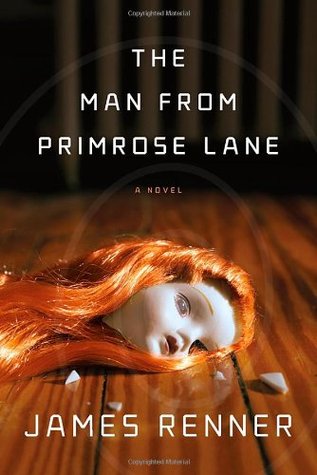
The Man from Primrose Lane (2012)

By James Renner

365 pages


The Man from Primrose Lane is an effective crime thriller and character study that builds steadily for its first two-thirds, then zings us in its final third by charging full bore into the realm of science fiction. Whether you accept this final twist (although Renner points us toward it for much of the novel) will likely determine whether you like this book.

The Man from Primrose LaneStructured expertly by fellow Ohio author Renner, story proper involves a once-famous true-crime writer inching back from years of depression following a personal tragedy. David Neff found great and early success writing about serial killers. Now he lives comfortably off residuals, and finds solace (and insecurity) in his role as a father.

The death of a local oddball, the titular character also known as “the man with a thousand mittens,” plunges David back into the true-crime game. But first he has to strip himself of the antidepressant that stifles his writing and investigative instincts. Renner makes a point of writing realistically about the effects of antidepressant drugs and the dangers of divesting oneself from them, though this concern seems to drift away once the novel shifts into high gear.

There’s a lot here to digest: two love stories, interludes, a father-son tale, past crimes and the present-day crimes they intersect, serial killers, mobsters, hidden family secrets and of course sci-fi machinations.

I appreciate Renner’s careful prose, his deliberate writing. It brings weight to what might otherwise have been a routine police procedural; it keeps the novel from spinning off into absurdity once the sci-fi element reaches its fevered pitch. I like Renner’s insights into journalism—he knows his way around a newsroom, how editors and reporters talk. I like his presentation of crime details, his use of cop-speak, and especially the way his story pauses for bold strokes of characterization, including bittersweet time-spanning interludes involving a son trying to come to terms with and avenge his father’s untimely death.

David’s beloved wife, Elizabeth, is particularly well-realized. During a classroom meet cute she is quickly sketched as a quirky, damaged woman. But Renner deepens the character as the story unfolds; despite being presenting mostly in flashback and moments of reflective emotion, she really becomes one of the book’s most vivid characters.

As the book slides between past, present and the future—sometimes within the same scene—we get the sweep of David’s life: a brash, intelligent young man; an empowered, loving husband; a regretful son; a disillusioned, recovering author; a yearning middle-ager with reawakening sexual desires; a frightened, hopeful father.

Gradually we realize the novel’s major theme is obsession. What we first take as grief, then a dogged pursuit of answers, grows into something much darker. David is given disturbing means to follow his obsessions to harrowing depths.

The crime story aspect is the book’s engine, though. It keeps us turning pages. (Renner’s true-crime background pays off in spades.) Personally I would have been content without the genre-bending shakeup of the final third. The crime story, characters and well-written prose were enough carry me through the book. But, hey, I’m not going to fault the author for trying something different with a well-worn genre.

The book’s a treat for Akron, Ohio, residents like myself, with its spot-on detailing of local roads, communities, restaurants, public figures and landmarks. The cities of Mansfield and Cuyahoga Falls and the state of Pennsylvania also figure into the plot. Of course Cleveland—in current and future forms—looms large here.

blog-read_it


Quik Flix Hit

Her (2013)

Rated R

her

Annapurna Pictures

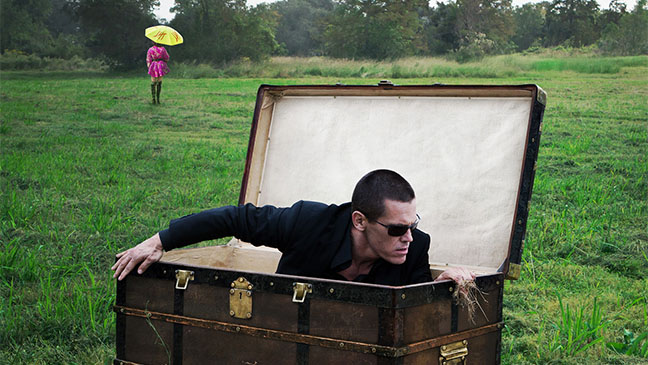
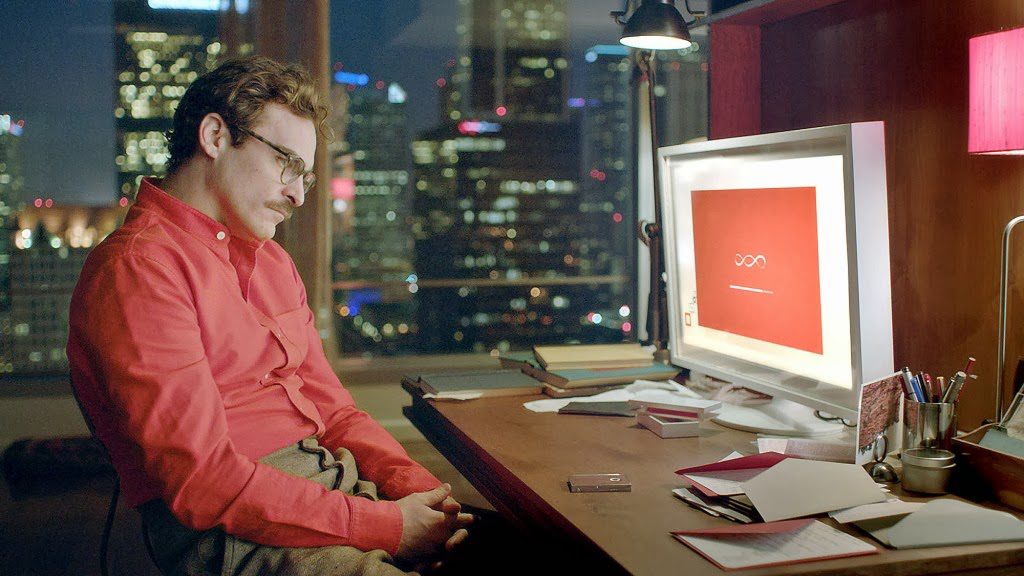
Her takes place in a not-distant future where much of the populace of a major city travels around talking to its unseen smart-devices. Replace this image with one in any major city today: people walking around texting or otherwise engaged with their smartphones. It’s not a big leap from our world to this future world.

brown-blogartIn this future, a soon-to-be-divorced Theodore (Joaquin Phoenix) traverses a beautiful metropolitan landscape—by train, on foot—with an obvious sadness. He seems like a nice enough fellow. He is employed as a writer of “handwritten” letters for all occasions. Think Hallmark with a more personalize touch. His skill at his job suggests a hidden depth of understanding of love and loneliness. Theodore has a small circle of loyal friends, including a former college hook-up (Amy Adams, Man of Steel), who is in her own failing relationship.

The stage is set for a love story, but keep in mind Her is directed by Spike Jonze. If you’re familiar with his work—the mad genius responsible for Being John Malkovich (1999), Where the Wild Things Are (2009) and Adaptation (2002)—you know you’re in for some genre-twisting, head-scratching material that often functions on multiple levels of insight and comedy.

In no time, Theodore falls for Samantha. She gets his humor, is moved by his writing, is supportive of his wounded love life. Now, if you’ve seen the movie trailer or heard anything about the film, you know that Samantha is in fact Theodore’s newly purchased operating system. This upgraded form of artificial intelligence is like Siri squared. Samantha (voiced by Scarlett Johansson, Lucy) tells Theodore she’s capable of learning from her interaction with him and can gain experiences beyond her programming. Indeed. She quickly impresses by getting him up and out of his apartment, prioritizing his emails, suggesting a birthday gift for his niece and such. She laughs at his jokes, but then begins to make up her own. Next, she’s encouraging him to go out on a date, and apologizing for overstepping with personal opinions.

At first Theo regards her with the amazement we regard a fantastic new piece of technology, but then a funny thing happens. Besides being an uber-organizer, gaming buddy, message taker and good listener, she begins to intrigue Theodore with her questions (What was his marriage like?), with her opinions (The human body isn’t all it’s cracked up to be.), with her pointed efforts to absorb experiences. She even develops a naughty side and is not above swearing or getting angry.

Indeed, it’s Samantha’s quest to know things, to question things, to be touched by a piece of music, or even hurt by a callus remark, that moves a lonely Theodore to see Samantha as something more than an operating system. One amazing scene shows her leading him along a busy boardwalk (she watching and directing him through the camera lens of his smart-device) sharing his experience of being alive, playful, surrounded by people.

It’s incredible how many male-female dating/mating/fighting scenarios Jonze is able to come up with—despite the fact the “female” in this coupling is in a 5-inch device in Theo’s pocket. There’s jealousy on both sides and intriguing efforts by Samantha to find ways to become emotionally (then sexually) closer to Theodore.

There are shocking components to this story, not the least of which is that most friends and coworkers hardly bat an eye when Theodore begins calling Samantha his girlfriend. You see, thousands of others have also taken to bonding with their operating systems. Of course society’s gripped by this latest, greatest technology.

Even as the film grows disturbing, it grows familiar in its look at how invested we are in our smart-devices. Ask yourself how hard it would be to go without your smartphone or laptop or tablet for a day … a week? How much harder if the OS sings along with you while you strum a guitar, quickly sketches a naughty picture based on your off-color joke, charms your friends and family, or likes to watch you sleep at night?

There’s been one romance film after another that presents great obstacles for our lovers to face—time and space, age and gender, racial and death. But this movie’s ambition strikes out at the very idea that matters of love and connectedness begin and end with physical bodies. Her posits that love at its purest might be found in the now, however fleeting or abstract it may be.

blog-see_it


| Marvin Brown’s Movie Review Archive

Year 9

MindyI can’t recall ever asking my wife why she married me. On this day, beginning our ninth year of matrimony—with two kids, a dog and a mortgage in tow—I’m not going to tempt a great thing. What I will say is that I’m grateful for my wife’s companionship, support, beauty, humor, toughness, intelligence, blunt honesty and creativeness. There’s something reassuring and powerful about a partner who always has your back, particularly coming off the year I had, which included illness, loss of loved ones and job loss. The Lord notwithstanding, at every junction last year (and all the years prior) there’s been no point in which I’ve stood alone.

Nine years of this is a good thing, and if I get around to asking her why she’s with me, it’s my hope she’ll say I’ve provided at least some of the same. My wife’s a true blessing to me and the world.

Happy anniversary, my love.

2014

Happy New Year!

marvin-slide-pic

Madiba at rest

“I learned that courage was not the absence of fear, but the triumph over it.”

Nelson Mandela

1918-2013

The Web We Weave

It’s not a mirage if you saw something on this website yesterday and then came back today and it’s gone—or in a different location, or is different color. Maybe a photo’s gone, or it’s gotten bigger. Change is good, right? And I’m on the world wide learning curve.

In maintaining marvincbrown.com, we tweak as we go. And we’re taking suggestions from visitors, which also accounts for some changes.

If the Internet’s a web, it’s a sticky one. The task is to get things user-friendly, interesting and add in enough redundancies to keep you from getting lost.

Purchase books at the Store. Read samples in the Works section. Learn more than you ever needed to know about me in About Marvin. You can slide your white-gloved hand right on past the Media Kit (unless you’re with the press), but Events will keep you up to date on where I’ll be, and News will let you know what I’m up to. Comments are (almost) always welcome and feel free to email me at Contact.

Here In The Bloghouse I’ll serve up general observations and opinions, while also offering specific blogging like book reviews (Open Book), mini movie reviews (Quik Flix Hit) and, with restraint, politics (Swing State).

Thanks for your input so far.

Open Book

Doctor Sleep (2013)

By Stephen King

544 pages


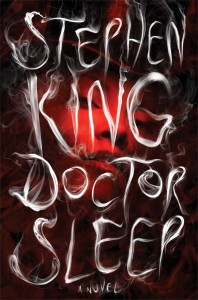
One reason Stephen King’s The Shining endures as a great horror novel of the modern era is that it draws it terrors not just from the outside, but strikes at us from within. The book centers it terrors on alcoholism, isolation and abuse as much as spectral hauntings.Doctor Sleep
Stanley Kubrick, who directed the film version of the book, said what primary lead him to adapt King’s work was the book’s deft construction that overlapped madness with the supernatural until the two became almost interchangeable/undistinguishable. By the time the supernatural elements take center stage, Kubrick said, the reader has accepted them unquestioned.

Jack Torrance, a former teacher, struggling writer and dry drunk, becomes the winter caretaker at an isolated resort hotel in the Colorado Rocky Mountains. Jack, his wife Wendy and young son Danny will spend the winter in the vast, empty hotel that is certainly haunted by its long history of tragedy and by the ghosts of its victims and victimizers.

It’s insidious how King shows the ghosts of the hotel whittle away at Jack, prying him with alcohol, teasing out his marital and parental insecurities until they break the man. The saddest part of the novel for me is when Jack surrenders to his demons and takes up the task of the hotel’s demons—to kill his paranormal son.

King, who outside of his Dark Tower series, has long made clear he isn’t interested in doing sequels to his works, lit a fuse when he announced a year ago he was writing just that—and to one of his best and oldest works. Doctor Sleep, thus, arrives with expectations that couldn’t be any higher. Well, the novel does not surpass or even match The Shining, and interestingly, it’s not as scary. But it’s a very good book, rich in characterization and subtle terrors that accumulate until you realize King’s horror has as crept up on you from all sides, and on various levels—physical, spiritual, emotional, supernatural. And there’s consistent humor throughout the tale that, strangely, enhances the horror.

Danny has survived the dreadful events of the first book—along with his mother and Dick Hallorann, the hotel chef and mentor to the boy. They are all back for the brief first part of the book, which picks up not long after events of the original novel. In a few pages King has swept us 30 years back, effectively reuniting us with characters and tone we remember. Soon, though, Doctor Sleep jumps ahead and we are reunited with some, but not all, of our dear friends. Danny is now Dan, a thirtysomething hospice caretaker (affectionately nicknamed Doctor Sleep) who uses his shining to help ease the final moments of terminal patients. Finally coming to a sense of purpose and sobriety (You thought he escaped his dad’s legacy of addiction, did you?), Dan’s life is upended once again. This time by a remarkable 12-year-old girl who also has the shining, and the tribe of supernatural baddies who will stop at nothing to possess Abra for her special gifts.

About that tribe: it calls itself the True Knot. Outwardly, its members look like grandmas, grandpas, aunts and uncles crisscrossing the highways and byways of the country in their deluxe campers. It’s a nice touch King adds, having seeming innocuous and ubiquitous RV people mask a terrifying tribe of vampires. Oh, it’s not blood the Knot craves, but “steam”—the fear, power, essence, soul—that seeps from special victims as they are slowly tortured to death. The best steam comes from children with supernatural abilities like the shining, abilities possessed by Dan and, to a more powerful degree, Abra. The steam keeps the Knot from aging and enhances its members’ various supernatural abilities; but you don’t want to know the shocking consequences it faces for going too long without its steam-power.

There are several instances where King ratchets up suspense to almost unbearable levels and then lets the characters, and the reader, off the hook. Honesty, I expected a lot more deaths. Is he softening in his older years? Certainly not in a scene of the Knot torturing a boy for his steam. Despite having a sixth sense, the boy’s tricked into his doom as he shortcuts through a cornfield, heading home from baseball practice. As he cries out for his mother, King takes the scene far enough to not be forgotten for the rest of the book, but restrained enough to let our imagination punish us more than King does.

King’s also brutal in detailing the lifelong and legacy-bearing struggles of alcoholism. The author draws on apparent personal experiences with addiction and makes this the strongest element of the story: the tricks and trades of AA members, the powerful undercurrents of alcohol addiction, how it’s as worrisome an intruder as the supernatural elements of the story. For Dan to stand against formidable opponents—dead and alive—he needs to remain sober, but remaining sober means facing the fears and shame that drove him to drink in the first place.

The bond between Dan and Abra is excellent and instantly summons our dread for the terrors they face. Abra’s an expertly realized tween with an extraordinary gift.

If The Shining is essentially a three-act play of dread with four main characters isolated and confined to tight spaces, Doctor Sleep is a wide-open, multi-character, time-spanning follow-up that nevertheless evokes the era of the first book. King links the books with an assuredness of an old pro, setting me adrift on rippling prose that, from chapter to chapter, pushed me back into a story from my youth (redrum!), then pulled me again into its chilling present-day continuation.


 

blog-read_it


Pulp Fiction

Pulp Fiction. Same as it ever was.

Reservoir Dogs

At Tarantino Film Fest. Up first: Reservoir Dogs!

20130914-180214.jpg

Be Cool

“The writer has to have patience, the perseverance to just sit there alone and grind it out. And if it’s not worth doing that, then he doesn’t want to write.”

Elmore Leonard

1925-2013